
January symbolizes a threshold: you step out of the old year while you still carry its weather, memories, and lessons. Named for Janus, Rome’s god of doorways and beginnings, January invites reflection and forward focus at the same time. With New Year’s Day 2026 landing on Thursday, January 1, this month becomes a clean “reset screen” for your next chapter. Encyclopedia Britannica+1
Why January can feel emotionally “loud” in the U.S.
In the U.S., January often hits as a double shift: the holidays end, winter deepens, and routine returns. That contrast can feel like stepping from a warm, crowded room into cold air.
However, this emotional weight is also part of January’s symbolism. The season teaches two ancient moves at once:
- Retreat (rest, repair, simplify)
- Emergence (restart, recommit, reimagine)
Think of it like a game lobby after a big boss fight: you patch up, review what worked, then pick your next quest.
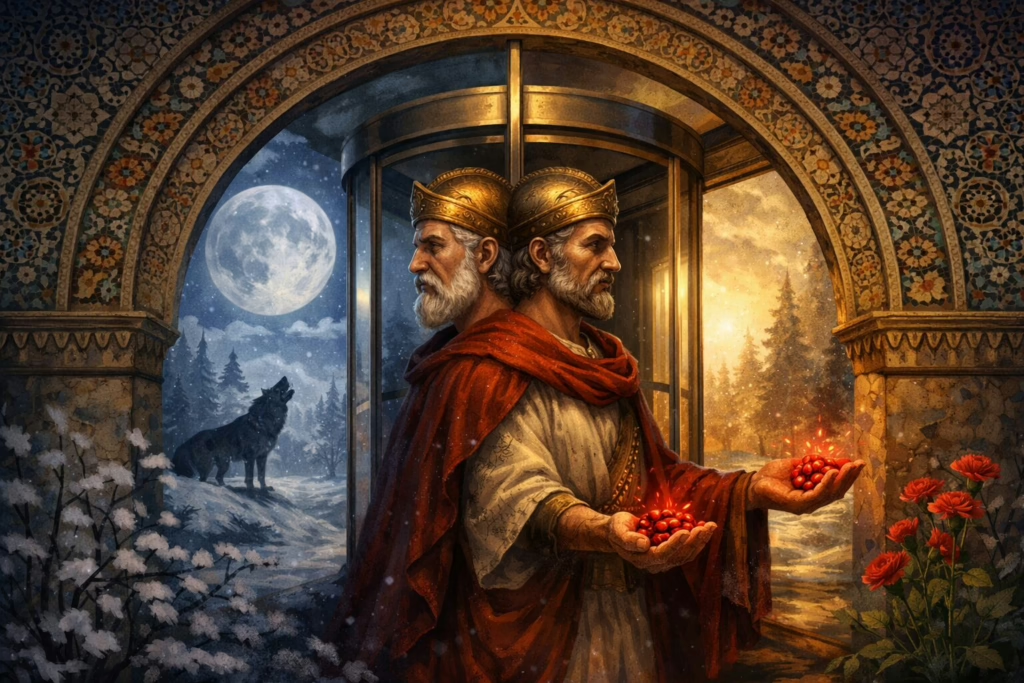
The core symbol of January: Janus, the gatekeeper
Janus is the Roman spirit-god of doorways, gates, and archways, basically anything that marks a passage from one state to another. Encyclopedia Britannica
January takes its name from Janus because he represents beginnings and transitions, the exact vibe of the year turning over. Encyclopedia Britannica
Janus is often described as “two-faced,” meaning he can look backward and forward at the same time. Symbolically, that gives you a powerful January practice:
- Face one: What did last year teach me?
- Face two: What kind of person am I becoming next?
New Year’s Day 2026 is a “Janus moment”
In the United States, New Year’s Day 2026 falls on Thursday, January 1, 2026, and it’s listed on the federal holiday schedule. U.S. Office of Personnel Management
That makes the first day of January literally a calendar doorway: a social reset, a cultural pause, and a personal chance to choose your direction.
A Janus-style meditation: the revolving door of old and new
You do not need special tools for this. All you need is 7 to 10 minutes, a note app, or a small notebook.
Step-by-step meditation (simple, visual, repeatable)
- Settle your breath. Inhale slowly, exhale longer than you inhale. Do this for 1 minute.
- Picture a revolving door. Like the kind you see at a nice downtown hotel, glass panels, metal frame, soft reflections.
- Choose one intention. Pick only one:
- “Show me what I need to release from last year,” or
- “Show me what I need to build in 2026.”
- Spin the door gently. Watch the light flicker across the glass as it turns.
- Let it slow. When it stops, one panel faces you.
- Notice what appears. A word, a scene, a symbol, a color, a memory, a future snapshot. Do not force it.
- Ask for clarity. If you feel stuck, ask (in your own words): “What does this mean for me?”
- Write it down immediately. Capture details before logic edits the experience.
Repeat this weekly in January. Patterns usually show up by the third or fourth session.
Three January symbols to anchor your month
If you like tangible reminders (on your desk, in your pocket, on your lock screen), these symbols match January’s “seed and threshold” energy.
Garnet: January’s birthstone, the seed of resolve
Garnet’s name is linked to granatus, associated with pomegranate, a reference to seed-like forms and deep red color. gia.edu
Symbolically, that fits January perfectly: you plant small “seed goals” now, then protect them until they take root.
Try this: choose one “garnet goal” for 2026, small but intense. Examples:
- 15 minutes of skill-building a day
- a realistic savings habit
- a creative project with a weekly checkpoint
The Wolf Moon: courage when the landscape feels harsh
January’s full moon is often called the Wolf Moon, commonly explained as a seasonal moment when wolves were heard howling in winter nights. almanac.com+1
Whether you read it as folklore or nature symbolism, the message is useful: claim your voice when conditions feel unforgiving.
If January hits you with gray skies and low energy, borrow the wolf as a mental totem:
- Stand tall.
- Speak your intention out loud.
- Act like you belong in the cold season, because you do.
Carnation: January’s birth flower, warmth you can hold
Carnations are widely treated as January’s birth flower, and many sources tie them to themes like affection and admiration. proflowers.com
The name is often linked to roots like carnis (“flesh”), connecting to their classic pink tones and, in some traditions, to religious symbolism about “incarnation.” Gardenia+1
Practical January tip: bring color indoors. A small bunch of carnations can act like a visual “campfire” on your kitchen table.

How to use January symbolism to make your 2026 resolutions stick
New Year’s Day 2026 is a clean start, but January is the training arc. Use it like a smart system, not a dramatic vow.
- Pick fewer goals. Choose 1 to 3, then commit to tiny daily actions.
- Turn reflection into a ritual. Every Sunday in January, do a 10-minute “Janus review”: one win, one lesson, one next step.
- Track it like a quest log. A simple checklist beats motivation every time.
- Protect your seeds. January is not for perfection, it’s for consistency.
In Moroccan homes, we talk a lot about niyya (intention). January is a perfect month to set intention calmly, then let actions do the talking.

Conclusion
January’s meaning is not just “cold and slow.” It’s a doorway month, named for Janus, that teaches retreat and emergence together. As New Year’s Day 2026 arrives on Thursday, January 1, use January to plant your “seed goals,” borrow courage from the Wolf Moon, and keep warmth close through symbols like garnet and carnations. U.S. Office of Personnel Management+2Encyclopedia Britannica+2
FAQ
Why is January named after Janus?
January comes from the Roman god Janus, linked to beginnings, transitions, and doorways. He symbolizes looking back and forward at once, which matches the new-year threshold. Encyclopedia Britannica+1
What day is New Year’s Day 2026 in the U.S.?
New Year’s Day 2026 falls on Thursday, January 1, 2026, and appears on the U.S. federal holiday schedule. U.S. Office of Personnel Management
What is the January birthstone and what does it symbolize?
January’s birthstone is garnet, often associated with deep red “seed” imagery like pomegranate, making it a symbol of planted intentions and steady vitality. gia.edu
Why is January’s full moon called the Wolf Moon?
It’s commonly explained as a wintertime name tied to wolves being heard howling during cold January nights, popularized through almanac and folk traditions. almanac.com+1
What is January’s birth flower?
January is commonly linked with the carnation, associated with affection and warmth, and sometimes tied to “flesh” color roots and religious symbolism in naming traditions. Gardenia+1
Sources
- U.S. Office of Personnel Management (OPM), 2026 Federal Holiday Schedule. U.S. Office of Personnel Management
- Encyclopaedia Britannica, “Janus” and “January.” Encyclopedia Britannica+1
- Encyclopaedia Britannica, “Why does the New Year start on January 1?” Encyclopedia Britannica
- Gemological Institute of America (GIA), “January Birthstone: Garnet.” gia.edu
- The Old Farmer’s Almanac, “Full Moon January (Wolf Moon).” almanac.com
- TIME, “What Is a Wolf Moon?” TIME
- Gardenia.net and ProFlowers, January birth flower (carnation) naming and traditions. Gardenia+1