
February 2026 is a 28-day month with a “purification” origin story, packed with big U.S. observances and winter folklore. In 2026, it also overlaps with Ramadan (a month of fasting and reflection) and Lent. Look for the Full Snow Moon on February 1, then move through a calendar that blends history, skywatching, and seasonal “clean start” energy.
Core question: What makes February 2026 special, and what should U.S. readers know about its key dates, folklore, and spiritual themes (including Ramadan)?
Top 3 intents this guide covers:
- Quick February 2026 calendar highlights for the U.S.
- Why February is short (Roman history + leap-year logic)
- February folklore, the Snow Moon, and how Ramadan fits the month’s “reset” vibe
Why February Is Named for “Purification” (and Why It’s Short)
The name February traces back to februa, a Latin word linked to purification rites in ancient Rome. In Roman tradition, mid-February included cleansing rituals, which helped give the month its identity as the “clean-up” chapter of the year.
So why does February have 28 days most years?
- Early Roman timekeeping originally had a winter “gap” with no counted months. Later reforms added January and February to the calendar.
- Romans also used an extra intercalary month (often called Mercedonius) to keep seasons aligned, until Julius Caesar introduced the Julian calendar reforms that standardized leap timing.
- The Gregorian system kept February short while refining leap-year rules to reduce calendar drift.
Folklore alert: You may hear that Augustus “stole a day” from February to give August 31 days. Historians and calendar explainers treat this as a popular legend, not a solid cause of February’s length.
February 2026 at a Glance for United States Readers
Here are the dates most likely to show up in searches, calendars, and “People Also Ask” boxes.
Key dates (fast, snippet-friendly)
- Feb 1 (Sun): Full Snow Moon peaks (Eastern Time).
- Feb 2 (Mon): Groundhog Day.
- Feb 12 (Thu): Birthday of Abraham Lincoln (often noted, not a federal holiday).
- Feb 14 (Sat): Valentine’s Day.
- Feb 16 (Mon): Presidents’ Day (Washington’s Birthday, federal holiday).
- Feb 17 (Tue): Mardi Gras (Fat Tuesday).
- Feb 18 (Wed): Ash Wednesday (start of Lent).
- Around Feb 17–19: Ramadan begins (varies by local moon sighting; often observed from sunset).
- Feb 23 (Mon): Clean Monday (start of Great Lent in many Eastern Orthodox calendars).
One fascinating overlap in 2026
In many communities, Ramadan and Lent begin essentially side-by-side (Ramadan’s first night around Feb 17–18, Ash Wednesday on Feb 18). It’s a rare-feeling “double reset” week where millions lean into fasting, reflection, and self-discipline at the same time.

The Snow Moon: February’s Big Sky Moment
When is the full moon in February 2026?
The February full moon (the Snow Moon) peaks on Sunday, February 1, 2026, and it can look “full” the night before and after, too.
Why it’s called the Snow Moon
“Snow Moon” is a traditional North American name tied to heavy winter snowfall. Some Indigenous naming traditions also use animal or scarcity themes, such as “Eagle Moon,” “Raccoon Moon,” or “Hungry Moon,” depending on region and community.
Fun lunar trivia: February can have no full moon
Because a lunar cycle averages about 29.53 days, a 28-day February can occasionally end up with zero full moons (roughly a once-every-19-years quirk). It doesn’t happen in 2026, since the Snow Moon lands right on Feb 1.
Folklore and “Weather Wisdom” for February
Old sayings treat February like the game’s hardest winter level: short, sharp, and unpredictable.
A few classic French-style proverbs (best read as folklore, not forecasts):
- “February, the shortest month, feels the worst.”
- “Rain that never ends in February can bless the year’s growth.”
- “Better a wolf in the flock than a February that’s too beautiful.”
Practical takeaway: February weather often swings, so people use it as a “trend preview” month, even if the science stays more complicated than the sayings.
February 2026 as a Spiritual “Cleanse Month” (with Ramadan as the Side Quest)
February’s ancient “purification” theme lines up beautifully with Ramadan’s spiritual focus: restraint, reflection, gratitude, and generosity.
Ramadan context for U.S. readers
Ramadan begins with the sighting of the new crescent moon, which can vary by location and community. Many Muslims start observing from sunset on the first night. That’s why you’ll see slightly different “start dates” on different calendars.
A simple February “reset” plan (works whether you fast or not)
Think of it like a character build: small buffs, stacked daily.
- Body: tighten sleep, hydrate, and choose one food habit to simplify
- Mind: 10 minutes of quiet (journaling, prayer, or breathing)
- Community: one weekly act of service or giving
- Digital: one app you uninstall for the month
If you are observing Ramadan, these “buffs” naturally sync with suhoor planning, iftar pacing, and a calmer daily rhythm.
Numerology note (belief-based)
In modern numerology, people often link 2 with balance, partnership, and self-reflection. If you see “2” everywhere in February, treat it like a reminder to care for others while also restoring your own energy.
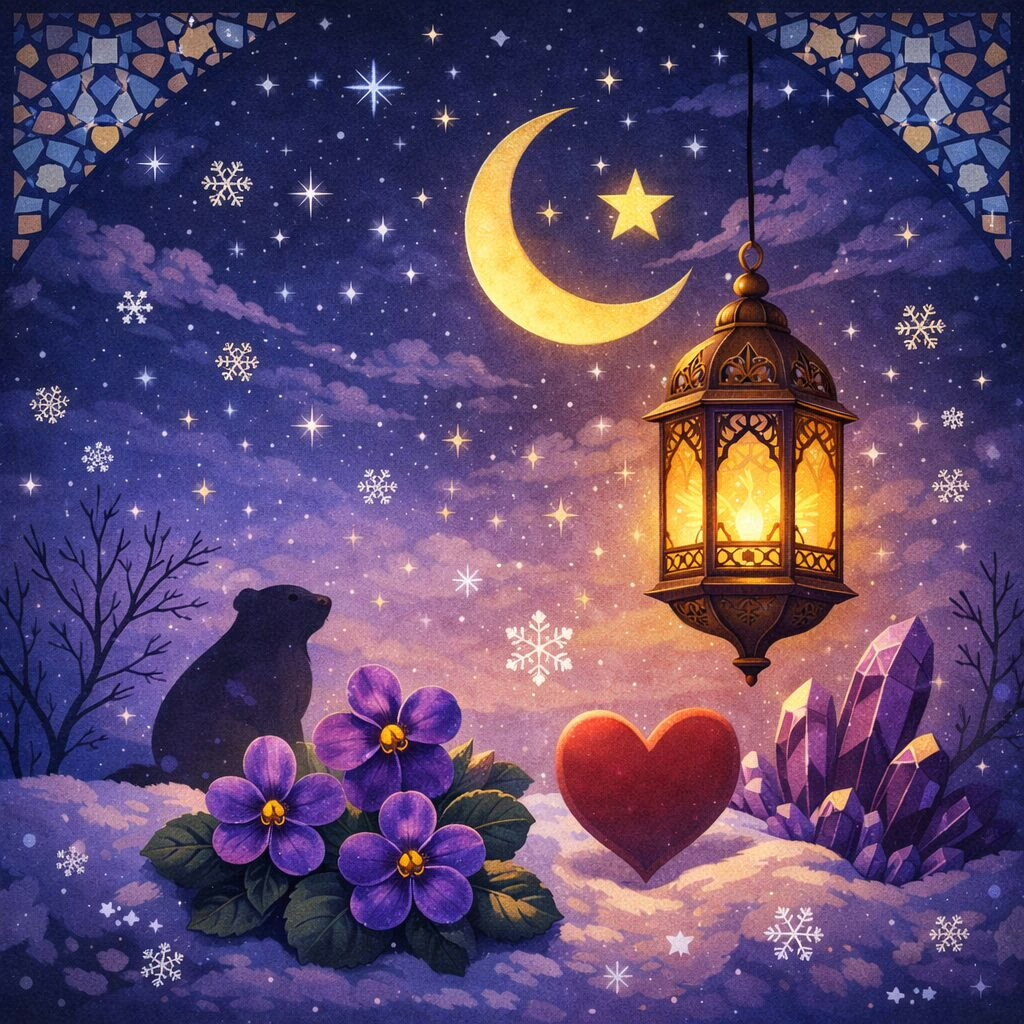
February’s Symbols: Violet and Amethyst
Birth flower: violet
Violets are a classic February birth flower in North American tradition, often associated with faithfulness and loyalty. They’re also one of those “hope in the cold” images that feels made for late winter.
Alt text idea: “Purple violet flowers with dew, February birth flower symbolism.”
Birthstone: amethyst
Amethyst is February’s birthstone, a purple variety of quartz. Many traditions connect it with clarity and protection, including the old belief that it helps guard against drunkenness.
Alt text idea: “Purple amethyst gemstone close-up, February birthstone.”
Quick “On This Month in History” Highlights (France-focused, for folklore flavor)
- Feb 6, 1934: A major antiparliamentary demonstration shook Paris near the Chamber of Deputies, tied to political tensions after the Stavisky affair and the dismissal of Jean Chiappe.
- Feb 1848 (Paris): The “February Revolution” pushed Louis-Philippe to abdicate, and Alphonse de Lamartine proclaimed a new republic soon after.
(If you want, you can spin these into a “February: the month of turning points” theme.)
FAQ
When does Ramadan start in 2026 in the U.S.?
Many calendars place the start around Feb 17–18, 2026, often beginning at sunset, but it can vary by local crescent sighting and community decision.
When is the full moon in February 2026?
The February full moon (Snow Moon) peaks on Sunday, February 1, 2026.
Is 2026 a leap year?
No. 2026 isn’t divisible by 4, so February has 28 days.
When is Presidents’ Day 2026?
Presidents’ Day (Washington’s Birthday) falls on Monday, Feb 16, 2026.
When are Mardi Gras and Ash Wednesday in 2026?
Mardi Gras is Feb 17, 2026, and Ash Wednesday is Feb 18, 2026.
Conclusion
February 2026 is short, intense, and surprisingly layered: Roman “purification” roots, U.S. calendar milestones, the Snow Moon, and a rare-feeling spiritual overlap as Ramadan and Lent arrive together. Use the month like a reset portal: clean up one habit, protect your energy, and step into spring with momentum.
Next step: Pick one theme for your February 2026, skywatching, wellness reset, or Ramadan planning, then build your month around it.
Sources
- Encyclopaedia Britannica, “Ramadan” (crescent-sighting timing).
- Encyclopaedia Britannica, Roman calendar background and intercalation (Mercedonius).
- Timeanddate.com, Presidents’ Day overview.
- Mardi Gras New Orleans official date page.
- Catholic Answers, Ash Wednesday 2026 date.
- Live Science and Space.com, Full Moon (Snow Moon) timing for Feb 2026.
- NASA GSFC eclipse site, synodic month length (29.530589 days).
- National Park Service, Abraham Lincoln Birthplace National Historical Park materials.
- National Women’s History Museum and Britannica, Susan B. Anthony bio.
- GIA, February birthstone amethyst.
- The Old Farmer’s Almanac, February birth flowers and full moon naming traditions.
- History Today, background on the Feb 6, 1934 crisis in France.
- Britannica, Feb 1848 and the June Days context.